

Startups and small businesses don’t have endless time or money.
So when it comes to your online presence, the big question is:
“Should I focus on social media or build a proper website first?”
Let’s break this down in simple, honest terms — no jargon, no hype.
What do we mean by “digital reputation”?
Your digital reputation is what people think and feel about your business after they:
- Search your name on Google
- Visit your website (if you have one)
- See your posts on social media
- Read your reviews
It’s the overall impression you give online:
Can you be trusted? Are you real? Are you active? Are you professional?
That’s what we’re trying to build and protect.
Social Media First: The Pros
Starting with social media (Instagram, Facebook, LinkedIn, TikTok, etc.) can be very tempting — and sometimes it is the right move.
Why social media is attractive:
- Fast to start: You can create an account in minutes.
- No big upfront cost: Free to set up, and you can start posting immediately.
- Where your customers already are: People scroll all day; you meet them where they hang out.
- Great for testing ideas: You can quickly see which products, offers, or content people respond to.
- Human connection: Stories, reels, and posts help people see the person behind the brand.
For a brand new startup with zero budget, social media can be your first “proof of life” online.
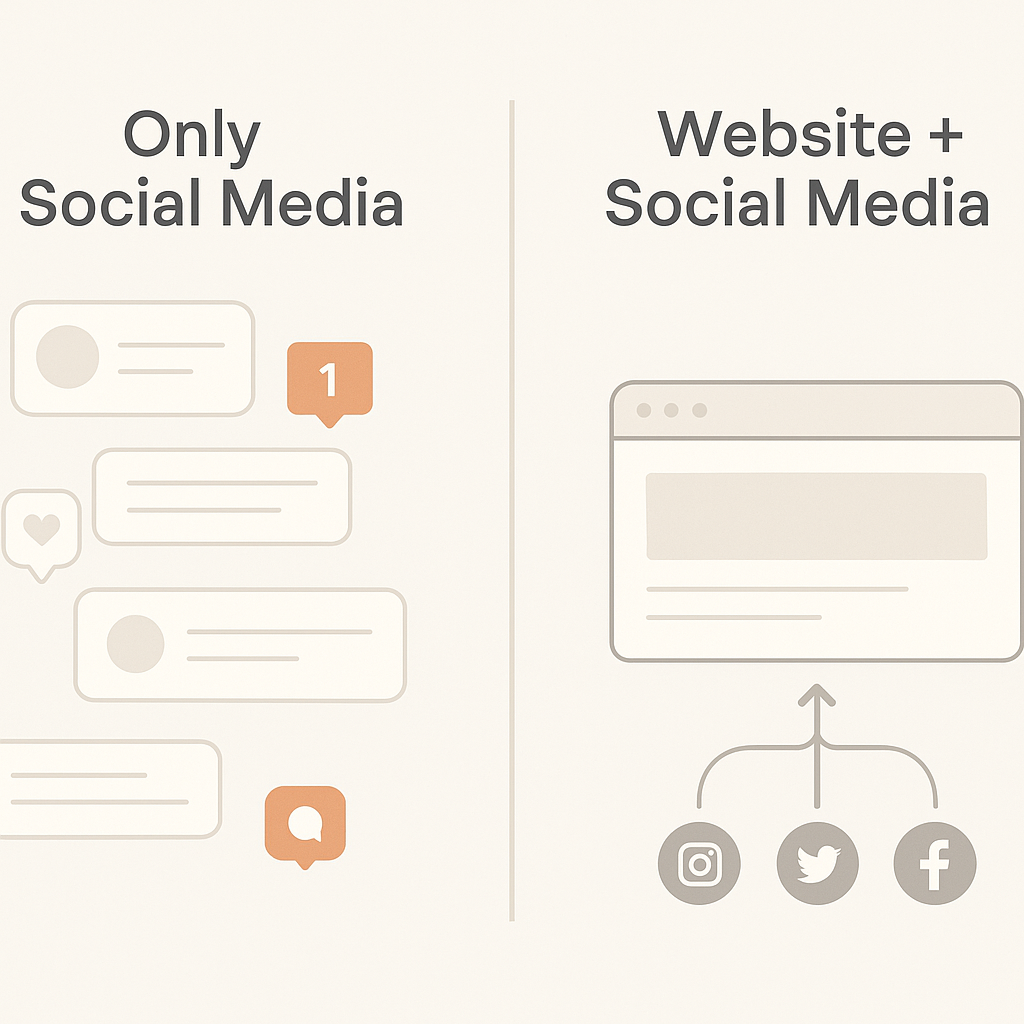
The Problem with Social-Only Businesses
Relying only on social media has some serious risks:
- You don’t own the platform
If your account is hacked, banned, or the algorithm changes, you lose everything overnight. - Hard to stay organised
Important details (pricing, services, FAQs) get buried under posts and DMs. - You look less established
Many customers will search your name and think: “Hmm… no website? Are they legit?” - Limited search visibility
Social media posts don’t always show up well in Google search. A good website can.
Social media is powerful — but it’s like renting a stall in a busy mall.
The mall can close. The rent can change. You don’t control the building.
Website First: The Pros
A website is your digital “home base”.
It doesn’t have to be fancy. Even a clean one-page site can do a lot for you.
Why a website matters:
- You look more professional
A simple website with your own domain instantly increases trust. - You’re easier to find
People search “Your Business Name” or “service + city”. Your website can show up in results. - All key info in one place
Services, pricing, FAQs, contact details — all clearly laid out, not lost in your feed. - You own it
Your domain and website are assets. Platforms may come and go — your site stays. - Works with everything else
You can link it in your social bios, email signatures, invoices, and ads.
For many SMEs, a website becomes the foundation of their digital reputation.
The Downsides of Website-Only
That said, if you only build a website and ignore social media:
- You might feel like you launched into a quiet room with no one in it.
- You miss out on daily visibility and relationship-building.
- People may find your website once, then forget about you.
A website is your home, but social media is your mouthpiece.
You usually need both — the question is just what to prioritise first.
So… Where Should You Invest First?
Let’s keep it simple.
1. If you’re just starting out with almost no budget
- You’re testing your idea
- You’re not sure what your final offer or pricing will be
👉 Start with social media.
Pick 1–2 platforms where your customers hang out.
Post consistently. Talk to people. Test offers. Listen to feedback.
Once you know:
- Who you serve
- What you’re selling
- What people keep asking you
…then move to a simple website.
2. If you already have paying customers or want to look more established
👉 Invest in a basic website first.
Even a single-page website with:
- Who you are
- What you do
- Who you help
- Pricing or starting from
- How to contact you
…will make you look more serious and trustworthy.
Then use social media to send people back to this website.
3. If you’re in a trust-heavy industry
(Consulting, finance, legal, IT services, compliance, healthcare, etc.)
👉 Website first, social media second.
Your clients will judge you heavily on:
- Professionalism
- Clarity
- Stability
No website in these industries often raises red flags.
A Simple Combo That Works for Most SMEs
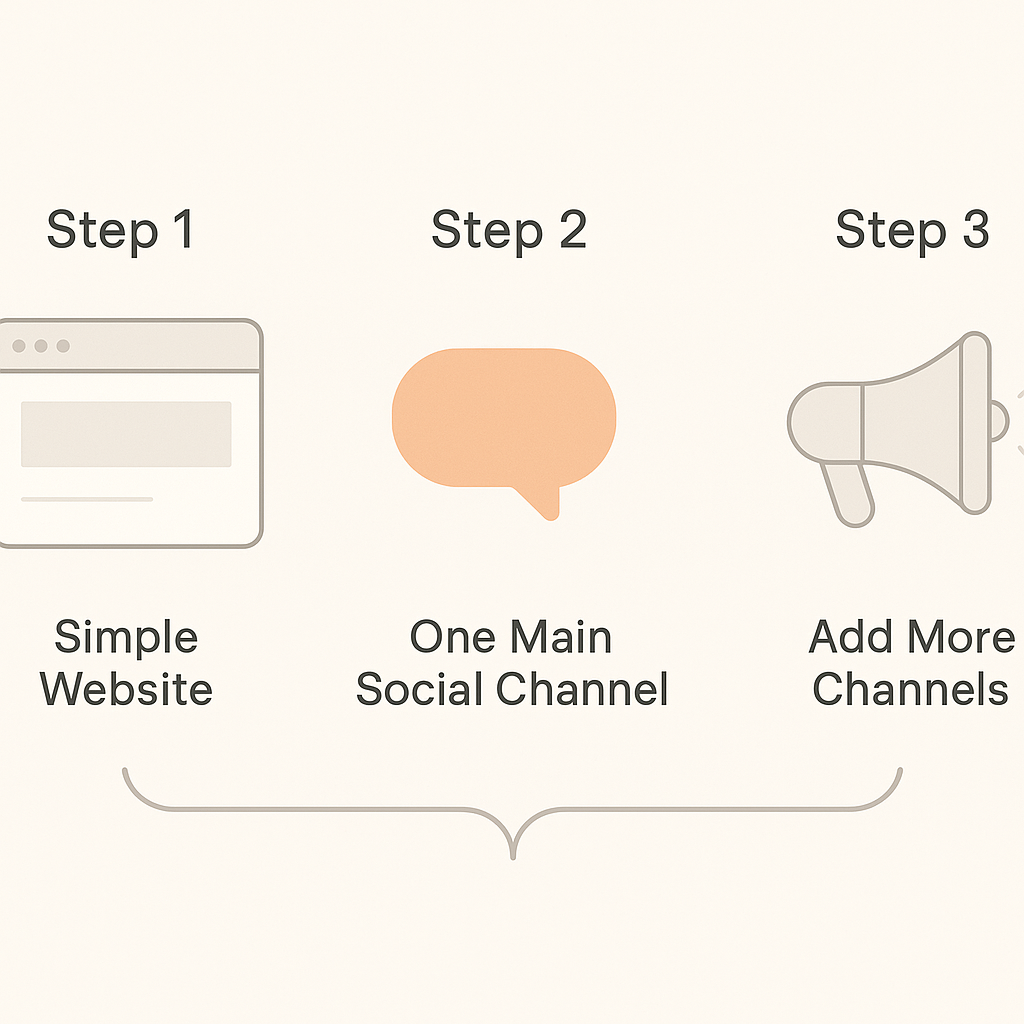
If you’re not sure, here’s a practical order that works for many startups and small businesses:
- Step 1: Build a simple one-page website
- Your domain (e.g.
yourbusiness.co.za) - Clear headline: who you help + what you do
- Short “About” section
- List of services or packages
- Social proof (testimonials, logos, reviews if you have them)
- Clear contact button or WhatsApp link
- Your domain (e.g.
- Step 2: Choose one main social platform
- Post 2–3 times a week
- Share behind-the-scenes, client wins, tips, FAQs
- Always include a call to action: “Read more on our website” or “Contact us via our site”
- Step 3: Add a second channel later
Once you’re consistent on one platform, you can add another.
Where Most Businesses Go Wrong
- They chase followers but have nowhere solid to send them.
- Or they spend money on a fancy website… that no one visits.
You don’t need to be “everywhere”.
You just need a steady, honest presence in the right places:
- A solid home base (your website)
- A consistent voice (your social media)
Work on both over time — but choose your starting point based on your stage and budget.
Conclusion
You don’t need a perfect website.
You don’t need viral social media.
You just need:
- A clear message
- A reliable place people can learn about you
- A simple way to stay in front of your customers
For some, that starts with social media.
For many, it starts with a website.
In the long run, your digital reputation is strongest when the two work together.