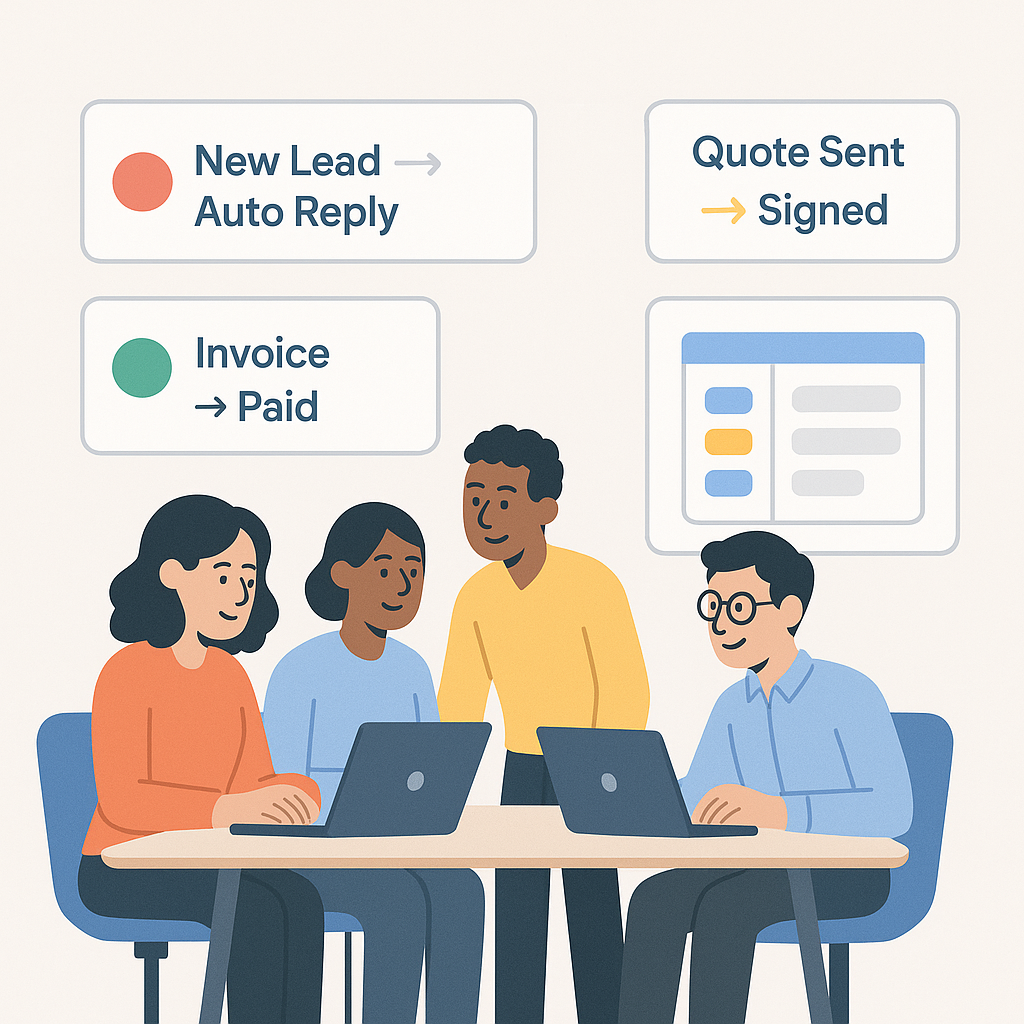
If you’re running a startup or small business, you’ve probably heard a lot about “automation” lately.
But here’s the real question: Is your business actually ready for automation?
Not “someday”, not “when things calm down” — right now.
This post gives you a simple, practical self-assessment you can use to check your readiness and decide your next steps.
Why Automation Matters Before You’re Overwhelmed
Automation isn’t about replacing people. It’s about freeing your team from repetitive tasks so they can focus on meaningful work: serving customers, closing deals, and improving your product or service.
For SMEs and startups, smart automation can:
- Reduce manual admin and human error
- Speed up quote → invoice → payment cycles
- Improve customer response times
- Give you better visibility into operations and cash flow
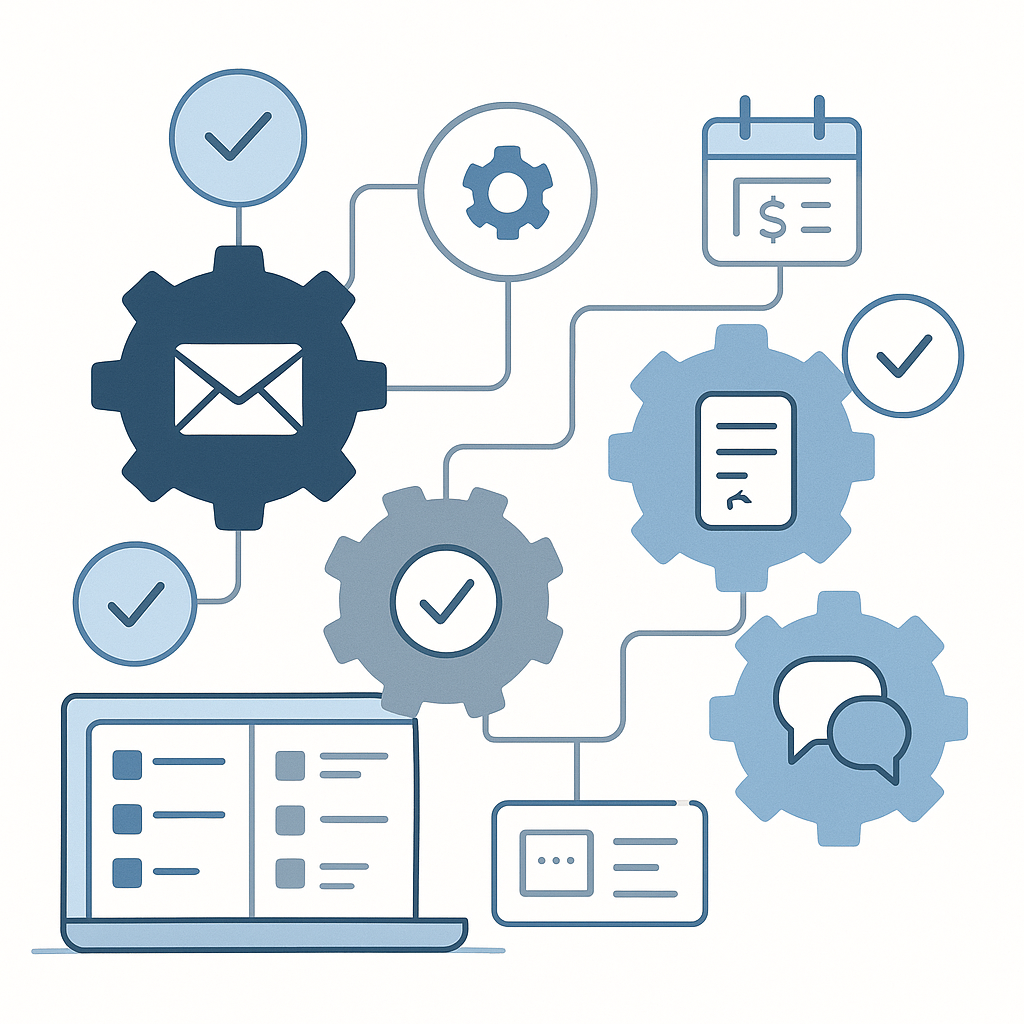
But trying to automate too early (or with messy processes) can create more chaos. That’s why a readiness check is so important.
A Simple Automation Readiness Assessment (Score Yourself)
Grab a pen or open a notes app.
For each question, score yourself:
- 0 = Not at all true
- 1 = Somewhat true
- 2 = Very true
1. Process Readiness
- We have clearly defined processes for key areas (sales, onboarding, service delivery, billing).
- People follow those processes consistently — not “everyone does it their own way”.
- We know where things frequently get stuck (bottlenecks, delays, common mistakes).
2. Data & Tools Readiness
- Our customer and financial data is mostly digital (CRM, spreadsheets, accounting tools) rather than on paper or in people’s heads.
- We use a small, manageable set of core tools (not 15 different apps no one really uses properly).
- We can find key information quickly (e.g. customer status, unpaid invoices, open tickets).
3. People & Culture Readiness
- My team is open to change and willing to try new ways of working if it makes life easier.
- We already use basic digital tools (email, shared drives, task tools) comfortably.
- Leadership is willing to invest time and budget into improving systems — not just “we’ll see one day”.
Now add up your score out of 18.
How to Read Your Score
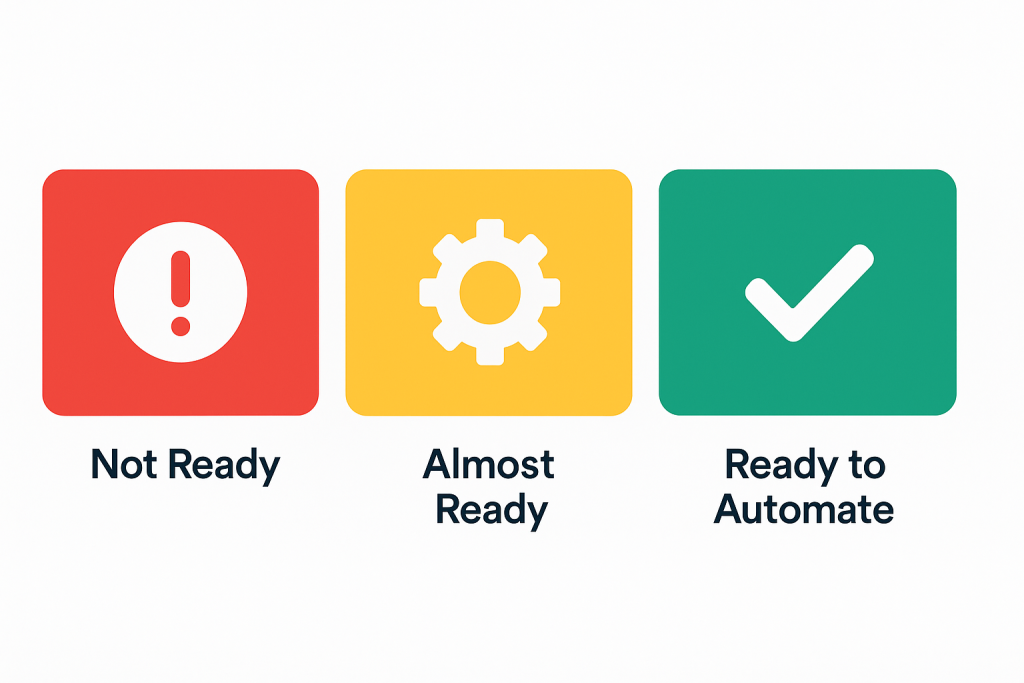
🟠 0–6: Foundation First
You’re not ready for automation yet — and that’s okay.
Your priority should be:
- Documenting your core processes (even in a simple Google Doc or Notion page)
- Getting key data into basic tools (CRM, accounting, shared folders)
- Making sure the team follows the same steps for repeatable tasks
Focus for the next 30–90 days:
Standardise how you work before you try to automate how you work.
🟡 7–12: Almost There
You have some structure, but there are gaps.
You’re a good candidate for simple, low-risk automation, such as:
- Automated email replies for new enquiries
- Simple follow-up sequences for quotes and unpaid invoices
- Basic reminders and task creation based on form submissions
Focus for the next 30–90 days:
Pick 1–3 high-friction processes (e.g. enquiries, onboarding, invoicing) and start automating the boring bits there.
🟢 13–18: Ready to Automate Strategically
You’re in a strong position to leverage automation properly.
You likely:
- Have defined processes
- Use digital tools consistently
- Have a team open to change
You can safely explore:
- Multi-step workflows (e.g. lead → qualification → proposal → signed → onboarding)
- Integrations between tools (CRM ↔ accounting ↔ project management)
- AI assistants for FAQs, internal support, and simple decision trees
Focus for the next 30–90 days:
Map a clear 90-day automation roadmap tied to specific outcomes (e.g. reduce manual invoicing time by 50%, respond to enquiries within 10 minutes, etc.).
5 Signs Your Business Is Truly Ready for Automation
If you’re still unsure, look for these practical signs:
- You keep repeating the same tasks every week
Manually sending the same emails, updating the same spreadsheets, chasing the same information. - You’re losing time to “where is that?” moments
No single source of truth. You spend more time looking for information than using it. - Your customer experience depends on one person’s memory
If that person is off sick, everything slows down or breaks. - You already have digital tools — but they don’t talk to each other
Data is scattered, and you manually copy/paste between systems. - You feel the business can’t grow without burning everyone out
The demand is there, but the current way of working doesn’t scale.
If these feel familiar, automation isn’t a luxury — it’s how you protect your time, your team, and your customers.
Where to Start (Without Overcomplicating It)
You don’t need to automate everything or buy an expensive platform.
Start small:
- Choose one process that is:
- Repetitive
- Rules-based
- Annoying to do manually
- Map the steps on paper (or a whiteboard / digital note).
- Identify triggers and outcomes
- Trigger: New enquiry submitted on your website
- Outcome: Lead is added to your CRM, welcome email sent, task created for follow-up
- Use simple tools first (no-code/low-code automation tools, built-in integrations, email rules, etc.).
Think of this as building a muscle. The goal of your first automation isn’t perfection — it’s creating a repeatable way to identify, design, and ship automations in your business.